

Smart Kitchen Induction Energy Ranges Market to Reach USD 3.74B by 2036; Whirlpool, Samsung, LG, Electrolux, Bosch
Smart Kitchen Induction Energy Ranges Market Size and Share Forecast Outlook 2026 to 2036
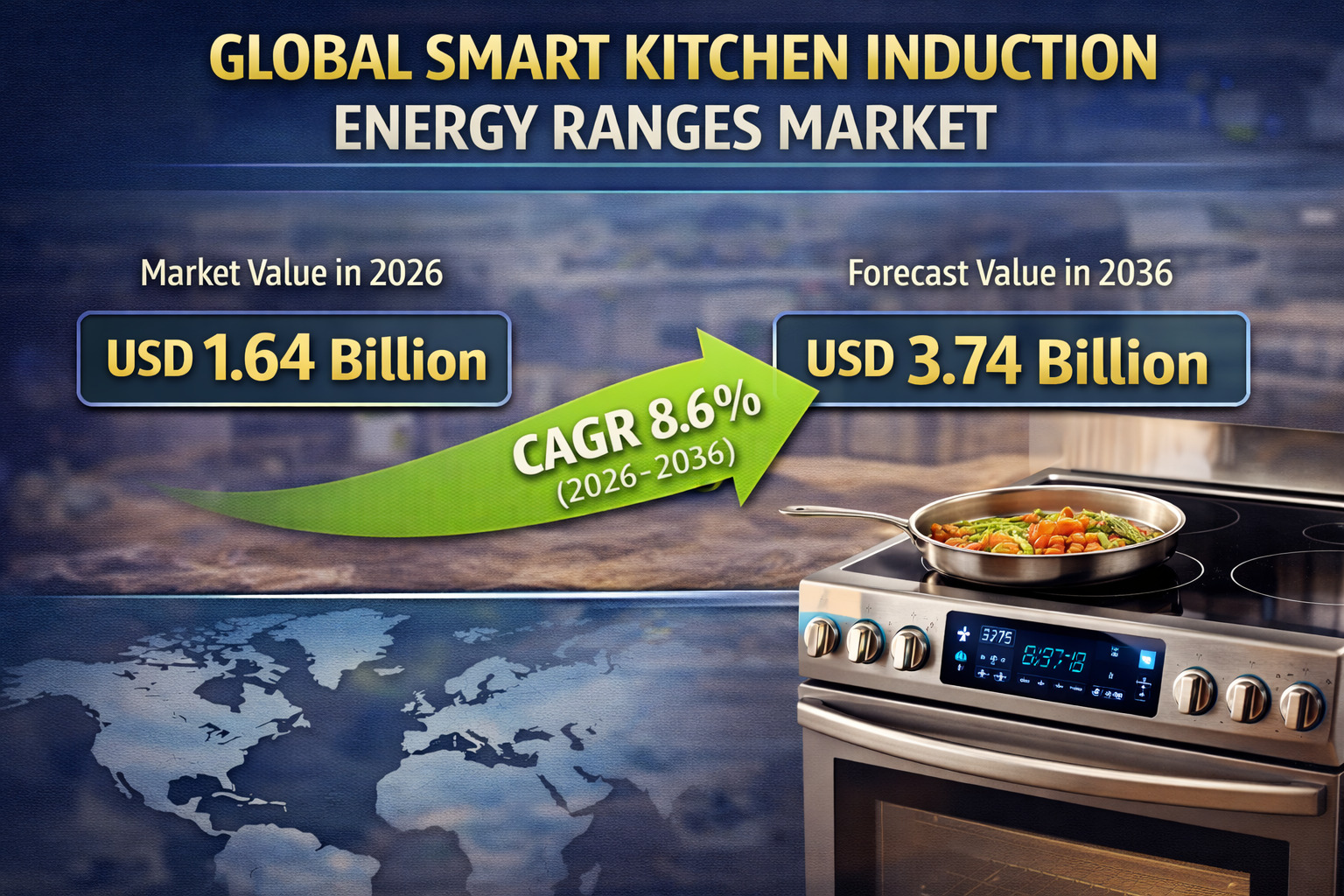
ROCKVILLE, MD, UNITED STATES, April 11, 2026 /EINPresswire.com/ -- According to Fact.MR’s latest analysis, the global smart kitchen induction energy ranges market is valued at approximately USD 1.64 billion in 2026 and is projected to reach USD 3.74 billion by 2036, expanding at a CAGR of 8.6%.𝗚𝗲𝘁 𝗗𝗲𝘁𝗮𝗶𝗹𝗲𝗱 𝗠𝗮𝗿𝗸𝗲𝘁 𝗙𝗼𝗿𝗲𝗰𝗮𝘀𝘁𝘀, 𝗖𝗼𝗺𝗽𝗲𝘁𝗶𝘁𝗶𝘃𝗲 𝗕𝗲𝗻𝗰𝗵𝗺𝗮𝗿𝗸𝗶𝗻𝗴, 𝗮𝗻𝗱 𝗣𝗿𝗶𝗰𝗶𝗻𝗴 𝗧𝗿𝗲𝗻𝗱𝘀: https://www.factmr.com/connectus/sample?flag=S&rep_id=13350
The market is expected to generate an incremental opportunity of over USD 2.1 billion during the forecast period.
The industry is undergoing rapid transformation driven by smart home ecosystem integration, energy efficiency mandates, and demand for precision cooking technologies. These ranges are evolving from basic induction cooktops into AI-enabled, connected cooking systems that serve as central hubs in modern kitchens.
Quick Stats
• Market Size (2026): USD 1.64 Billion
• Market Size (2027): USD 1.78 Billion (estimated)
• Forecast Value (2036): USD 3.74 Billion
• CAGR (2026–2036): 8.6%
• Incremental Opportunity: ~USD 2.1 Billion
• Leading Technology: Smart Connectivity (Wi-Fi/Bluetooth) – 37% share
• Leading Channel: Online Retail – 44% share
• Leading End User: Residential Consumers – 58% share
• Key Players: Samsung Electronics, LG Electronics, Whirlpool Corporation, Electrolux AB, Bosch Home Appliances
Executive Insight for Decision Makers
The market is shifting from hardware-centric appliances to software-driven smart kitchen ecosystems.
• OEMs must invest in AI cooking algorithms and app ecosystems
• Appliance manufacturers should prioritize interoperability with smart home platforms
• Investors should focus on brands offering integrated IoT-enabled kitchen solutions
Risk: Companies failing to integrate connectivity and automation risk becoming commoditized hardware suppliers.
Market Dynamics
Key Growth Drivers
• Rising adoption of smart homes and connected devices
• Increasing demand for energy-efficient cooking appliances
• Growth in premium kitchen remodeling and urban housing
• Consumer preference for precision and automated cooking experiences
Key Restraints
• High upfront cost compared to traditional cooking appliances
• Limited adoption in price-sensitive markets
• Complexity of installation and integration
Emerging Trends
• Integration of AI-driven cooking assistants and recipe automation
• Growth of voice-controlled and app-based cooking systems
• Development of energy monitoring and optimization features
• Expansion of multi-functional smart kitchen ecosystems
Segment Analysis
• By Technology:
o Smart connectivity dominates with ~37% share
o Voice assistants and gesture controls gaining traction
• By Channel:
o Online retail leads with ~44% share due to consumer research behavior and product comparison ease
• By End User:
o Residential consumers dominate (~58%) driven by home renovation and premium appliance adoption
Strategic Insight:
Connectivity is no longer optional—it is the core value proposition driving purchase decisions.
Supply Chain Analysis (Critical Insight)
Value Chain Structure
1. Raw Material & Component Suppliers
o Semiconductor components (IGBT modules)
o Glass-ceramic surfaces
o Sensors and control systems
2. Manufacturers / OEMs
o Appliance giants (Samsung, LG, Whirlpool, Electrolux, Bosch)
3. Technology Providers
o IoT platform developers
o Software and app ecosystem providers
4. Distributors
o E-commerce platforms
o Electronics retail chains
5. End-Users
o Residential households
o Hospitality and commercial kitchens
o Real estate developers
Who Supplies Whom
• Component suppliers provide electronics and materials to OEMs
• OEMs integrate hardware with software platforms and connectivity features
• Retailers and online platforms distribute to end consumers and builders
Key Insight:
Control over software ecosystems and IoT integration is becoming as critical as hardware manufacturing.
Pricing Trends
• Mass Segment: Basic induction ranges with limited smart features
• Premium Segment: Fully connected, AI-enabled smart induction ranges
Pricing Influencers
• Semiconductor and component costs
• Software integration and feature complexity
• Brand positioning and ecosystem compatibility
Margin Insight
• Premium smart ranges deliver 25–40% higher margins
• Subscription-based app ecosystems offer recurring revenue potential
Regional Analysis
Top Countries by CAGR
• India – 10.1%
• China – 9.2%
• Germany – 8.4%
• USA – 7.9%
• Japan – 7.6%
Regional Insights
• Asia-Pacific: Fastest-growing due to urbanization and rising incomes
• North America: High adoption of smart home ecosystems
• Europe: Strong demand driven by energy efficiency regulations
Developed vs Emerging Markets
• Developed markets: Innovation-driven adoption
• Emerging markets: Aspirational and urbanization-driven demand
Competitive Landscape
Market Structure
• Moderately consolidated with strong presence of global appliance leaders
Key Players
• Samsung Electronics
• LG Electronics
• Whirlpool Corporation
• Electrolux AB
• Bosch Home Appliances
Competitive Strategies
• Development of AI-based cooking features
• Integration with smart home ecosystems (Alexa, Google Home)
• Expansion of premium product portfolios
• Focus on energy efficiency and sustainability
Strategic Takeaways
For Manufacturers
• Invest in AI, IoT, and software-driven features
• Enhance energy efficiency and sustainability compliance
For Investors
• Target companies with strong smart home ecosystem integration
• Focus on premium appliance segments
For Distributors
• Expand online retail presence
• Provide installation and after-sales support services
Why This Market Matters
This market represents the convergence of consumer electronics, home appliances, and digital ecosystems. As kitchens become smarter, these ranges will play a central role in delivering efficiency, convenience, and precision cooking in the modern home.
𝗨𝗻𝗹𝗼𝗰𝗸 𝟯𝟲𝟬° 𝗜𝗻𝘀𝗶𝗴𝗵𝘁𝘀 𝗳𝗼𝗿 𝗦𝘁𝗿𝗮𝘁𝗲𝗴𝗶𝗰 𝗗𝗲𝗰𝗶𝘀𝗶𝗼𝗻 𝗠𝗮𝗸𝗶𝗻𝗴 𝗮𝗻𝗱 𝗜𝗻𝘃𝗲𝘀𝘁𝗺𝗲𝗻𝘁 𝗣𝗹𝗮𝗻𝗻𝗶𝗻𝗴 : https://www.factmr.com/checkout/13350
Related Reports:
Smart Home Refillable IAQ Air Filters Market: https://www.factmr.com/report/smart-home-refillable-iaq-air-filters-market
Smart Thermostat Market: https://www.factmr.com/report/smart-thermostat-market
Smart TV Market: https://www.factmr.com/report/smart-tv-market
Smartwatch Packaging Market: https://www.factmr.com/report/smartwatch-packaging-market
About Fact.MR
We are a trusted research partner of 80% of fortune 1000 companies across the globe. We are consistently growing in the field of market research with more than 1000 reports published every year. The dedicated team of 400-plus analysts and consultants is committed to achieving the utmost level of our client's satisfaction.
S. N. Jha
Fact.MR
+1 628-251-1583
email us here
Legal Disclaimer:
EIN Presswire provides this news content "as is" without warranty of any kind. We do not accept any responsibility or liability for the accuracy, content, images, videos, licenses, completeness, legality, or reliability of the information contained in this article. If you have any complaints or copyright issues related to this article, kindly contact the author above.
